Precision Adjustments: Controller Calibration Strategies for Latency Reduction in Esports Hybrid Streams
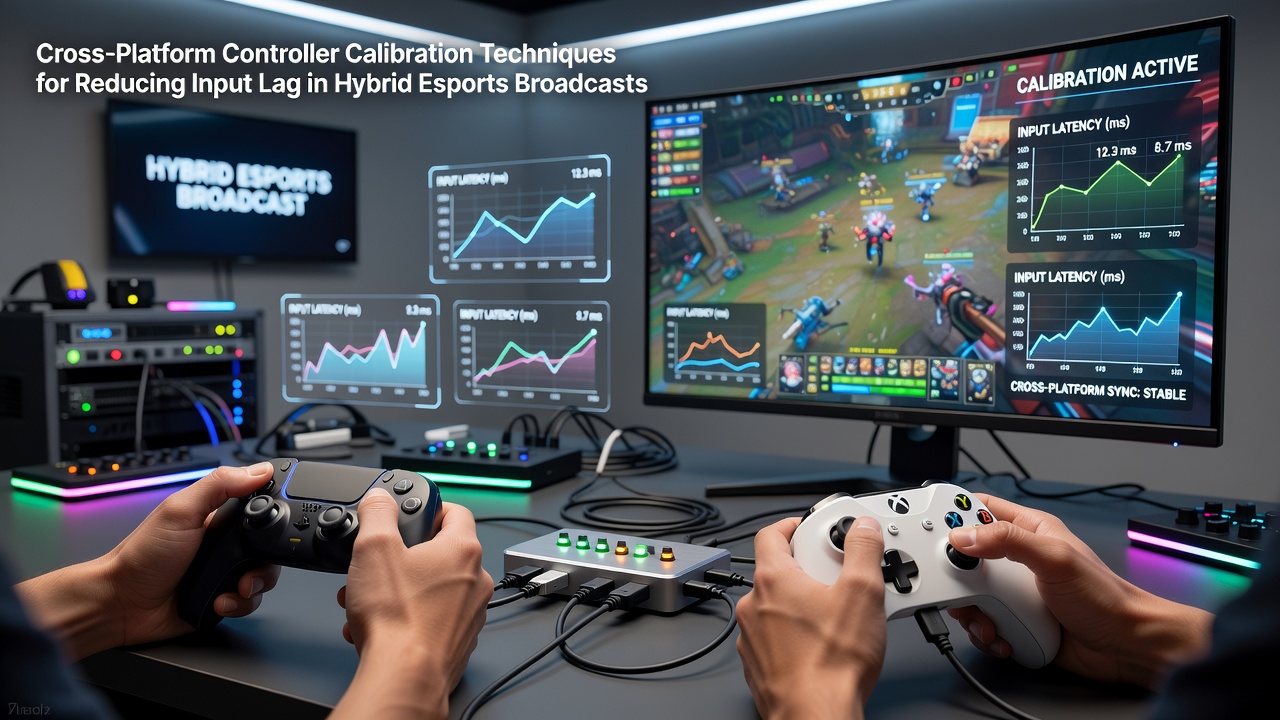
Hybrid esports broadcasts combine console, PC, and mobile inputs into unified streams, and controller calibration addresses input lag that arises from mismatched polling rates, firmware variances, and signal processing delays across those platforms. Data from industry reports shows that uncalibrated controllers can introduce 20 to 40 milliseconds of additional latency when signals route through capture cards and encoding software. Observers note that esports production teams in July 2026 began standardizing calibration routines ahead of major cross-platform tournaments to keep total end-to-end latency under 50 milliseconds.
Core Sources of Input Lag in Mixed Hardware Environments
Input lag originates at the hardware layer when controllers sample button presses at inconsistent intervals, and it compounds during transmission to broadcast encoders. Research indicates that USB polling rates on PC setups often run at 1000 Hz while console Bluetooth connections hover around 250 Hz, creating timing mismatches that manifest as delayed on-screen responses. Those who manage hybrid productions adjust for these differences by aligning clock speeds and reducing wireless interference before matches begin. Figures from academic studies reveal that signal interference from nearby devices adds another 10 to 15 milliseconds when multiple controllers operate in the same venue.
Calibration Protocols Across Device Ecosystems
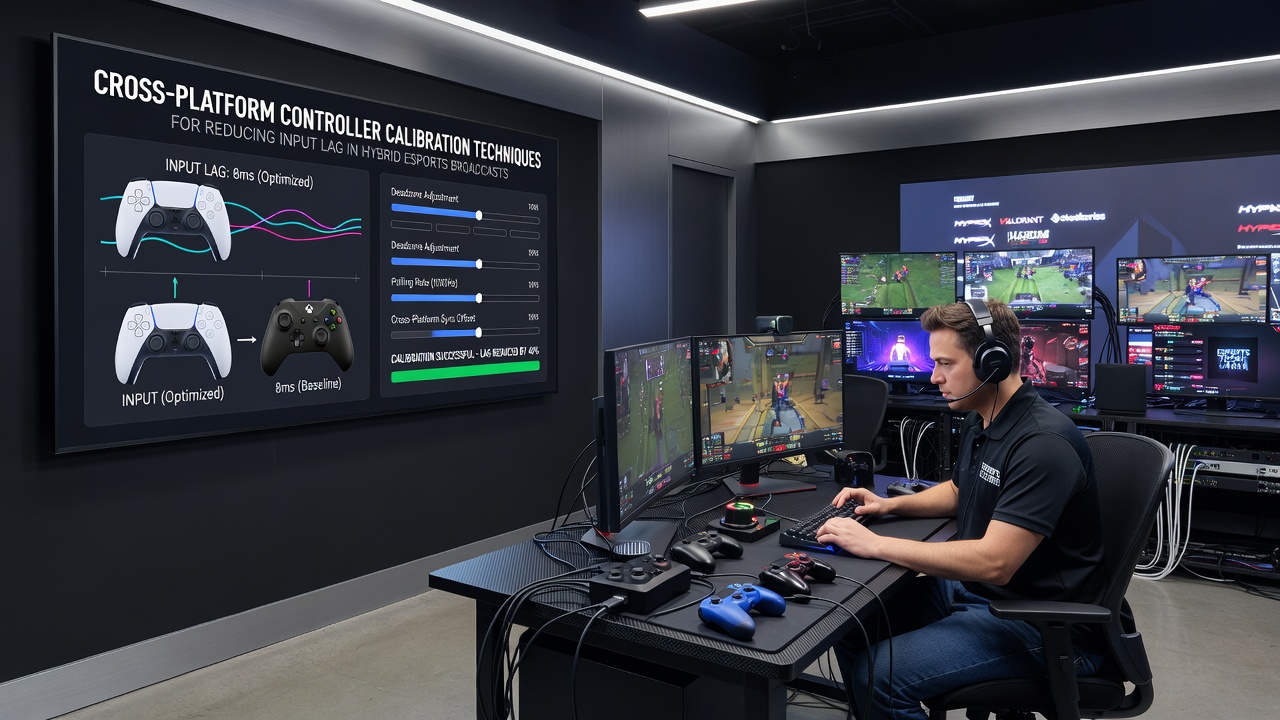
Teams apply deadzone mapping first to eliminate unintended stick drift, then fine-tune trigger thresholds so that analog inputs register at the same sensitivity level on every platform. Software utilities allow technicians to override default firmware settings and lock polling rates at 500 Hz or higher where hardware permits. In one documented workflow analysts export calibration profiles from PC tools and import them into console accessory managers to maintain consistency. Evidence suggests that firmware updates released in early 2026 improved Bluetooth stack stability on several major controller models, cutting average wireless latency by up to 12 milliseconds when paired with updated receiver firmware.
Integration with Broadcast Encoding Pipelines
Once controllers are calibrated, production crews route inputs through low-latency capture hardware that bypasses intermediate processing stages. Capture cards configured for minimal buffering preserve the timing gains achieved during calibration, and engineers monitor frame timing logs in real time to verify that added delay stays below target thresholds. Data shows that combining calibrated controllers with optimized encoding presets can reduce overall stream latency by 25 to 35 milliseconds compared with default settings. During July 2026 events, several tournament organizers published latency metrics confirming that these combined adjustments kept viewer-perceived delay within acceptable bounds for competitive integrity.
Testing and Validation Methods Employed by Production Teams
Validation begins with high-speed camera recordings that capture both physical button presses and on-screen reactions, allowing frame-by-frame comparison to quantify remaining lag. Analysts then cross-reference those measurements against software telemetry collected from each device, and they iterate on calibration files until variance across platforms falls within a five-millisecond window. Studies conducted by research institutions in Canada demonstrate that repeated testing cycles improve consistency by identifying outlier controllers that require individual firmware flashes. Production crews also simulate network conditions to ensure calibration holds when streams traverse variable internet routes to remote viewers.
Case Examples from Recent Tournament Setups
One European production group standardized calibration across PlayStation and Xbox controllers for a 2026 hybrid event, resulting in uniform input timing that matched PC mouse and keyboard baselines within measurable tolerances. Another team working with mobile and console hybrids used custom scripts to apply region-specific calibration offsets derived from local testing data. Reports from Australian esports organizers indicate that these procedures contributed to smoother spectator experiences during simultaneous multi-platform competitions held that summer.
Conclusion
Cross-platform controller calibration remains a foundational step for hybrid esports broadcasts that seek to minimize input lag, and ongoing firmware improvements plus standardized testing protocols continue to support tighter timing across devices. Production teams that document and share calibration profiles help establish repeatable practices that benefit future events. Continued measurement against evolving hardware standards will determine how these techniques scale as new controller models enter the ecosystem.