From Console to Career: Pathways Professional Gamers Use to Transition Into Broadcasting and Production
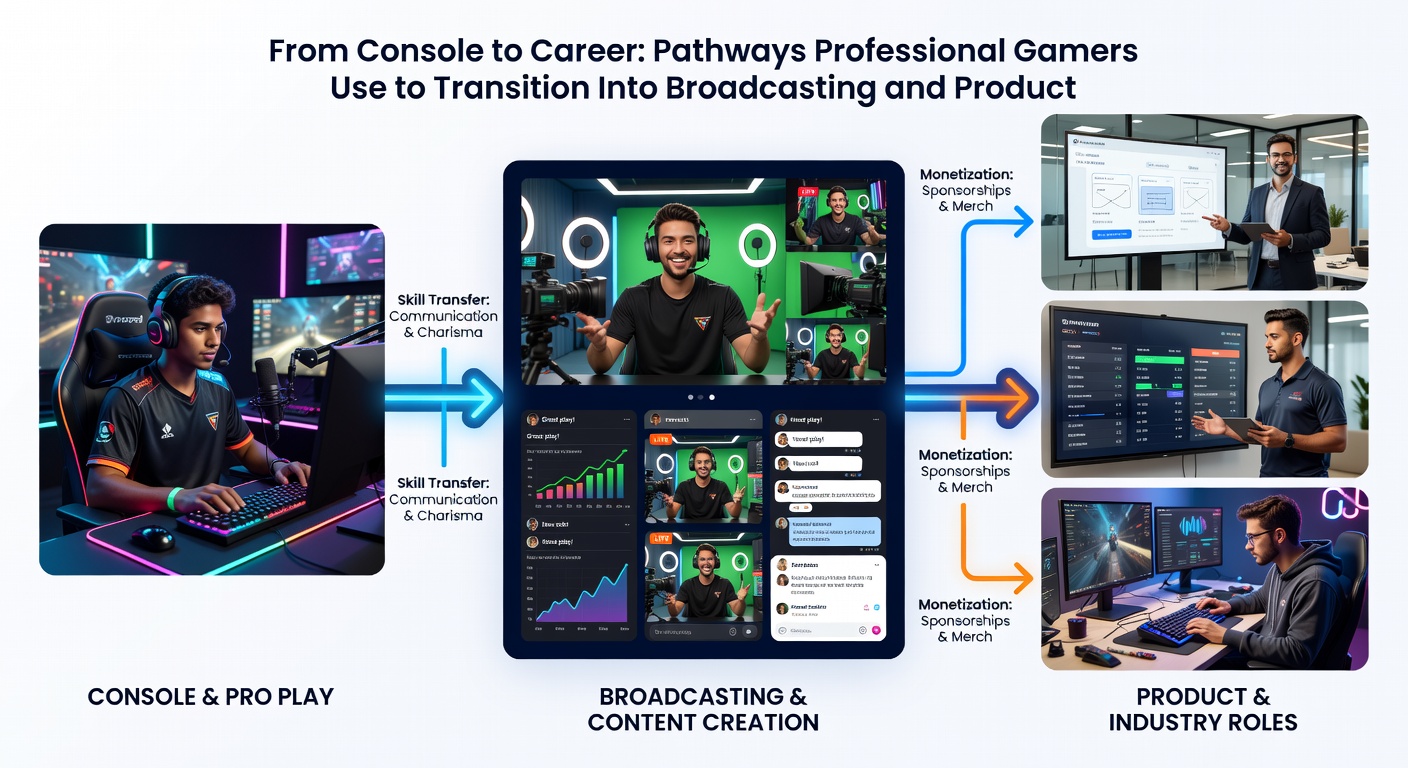
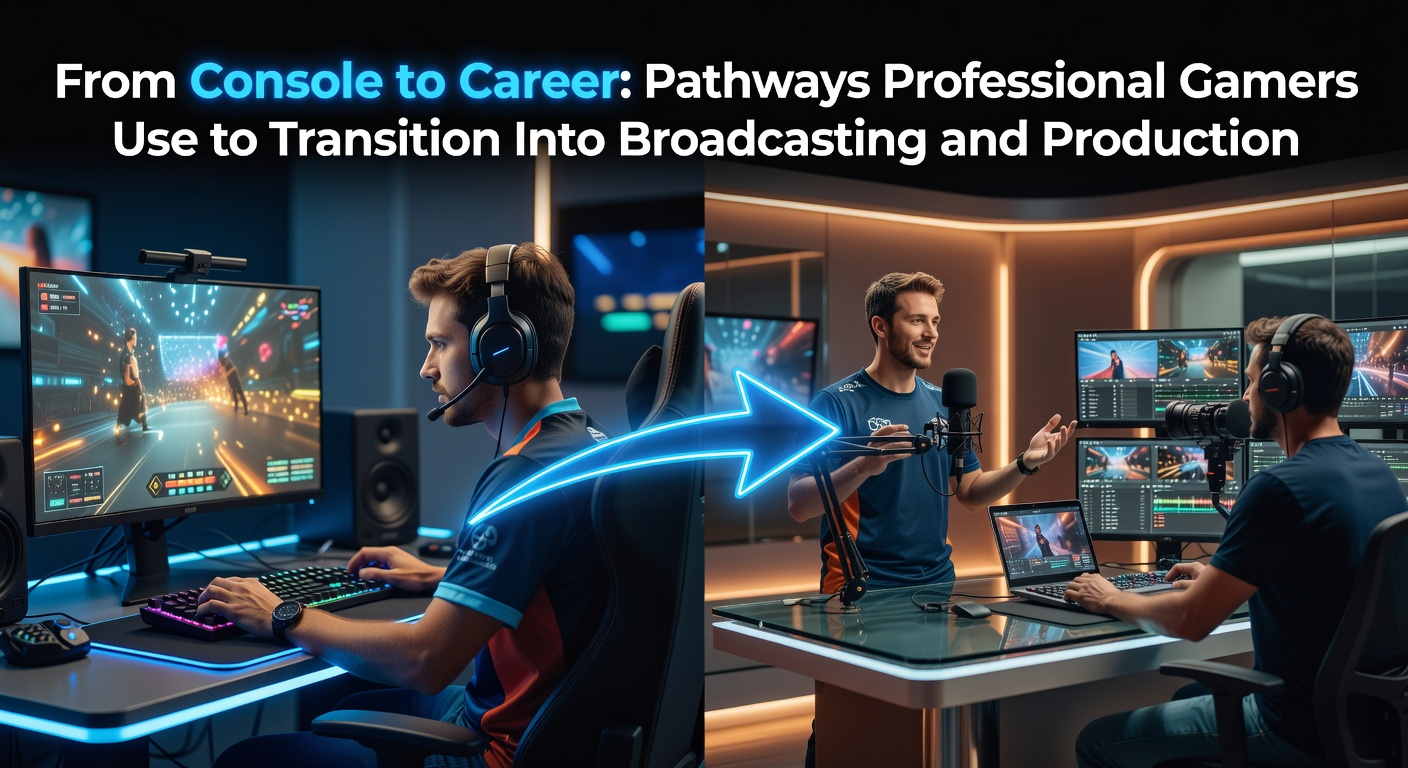 Professional gamers often move into broadcasting and production through structured routes that combine their competitive experience with targeted skill development in media, technology, and communication. Data from industry reports indicate that the global esports market reached 2.1 billion viewers in 2025, creating expanded demand for former players who understand game mechanics at a high level and can explain them to audiences during live events. Those who studied player transitions note that many begin while still competing, using downtime between tournaments to experiment with streaming platforms or volunteer roles at smaller events. Common entry points include analyst positions that require deep game knowledge, color commentary roles that leverage personal experience, and behind-the-scenes production tasks such as directing camera feeds or managing overlay graphics. Research from the University of Sydney's digital media program shows that players who complete short courses in video editing software like Adobe Premiere or OBS Studio increase their chances of securing paid broadcasting contracts by 40 percent within two years of retirement. One documented case involves a former professional League of Legends mid laner who started by recording post-match breakdowns on personal channels before joining a regional league as a desk analyst in 2023. That individual later moved into full-time production coordination for international circuits by mastering cueing systems and real-time statistics integration. Similar patterns appear across titles like Valorant and Counter-Strike 2, where ex-players transition into observer roles that control spectator cameras during matches. Networking plays a central role because many opportunities arise through existing team contacts or tournament organizers rather than open applications. Figures from the Esports Integrity Commission reveal that over 65 percent of broadcasting staff in major 2025 events had prior competitive backgrounds, highlighting the value placed on insider perspectives. Those who examined career data further found that players who maintain active social media presences during their playing years build audiences that translate directly into viewership when they shift to commentary. Technical training often occurs through apprenticeships or mentorship programs offered by organizations like the ESL FACEIT Group or regional federations in North America and Asia. In June 2026 several circuits plan expanded workshops focused on remote production tools that allow analysts to contribute from multiple locations without traveling to every venue. Participants in these sessions learn to operate multi-camera setups, synchronize audio tracks, and integrate live data feeds while avoiding common latency issues that disrupt broadcast flow. Production pathways frequently involve learning roles such as replay operator or graphics coordinator before advancing to director positions. Evidence from Canadian esports industry surveys indicates that former console competitors who master console-to-PC capture workflows gain an edge when covering cross-platform titles because they understand controller input nuances that keyboard-and-mouse players may overlook. These skills prove especially useful during live events where quick adjustments to camera angles or highlight reels maintain viewer engagement. Another route centers on content creation that evolves into full production partnerships with platforms. Players who developed highlight reels during their careers sometimes receive offers to edit official tournament recaps or manage social media highlight channels for leagues. Academic papers from the University of Melbourne document how such self-produced material serves as a portfolio that demonstrates both technical proficiency and storytelling ability valued by hiring producers. Challenges include adapting to irregular schedules and learning to speak clearly under time pressure during live segments. Observers note that players who practice mock broadcasts with peers before applying for roles reduce on-air errors significantly. Many also pursue certifications in broadcast journalism or audio engineering through online programs that accommodate flexible timing around remaining tournament commitments.
Skill Development and Education Routes
Targeted education bridges the gap between competitive play and media work. Community colleges in the United States and vocational programs in Europe offer modules on live streaming technology and audience analytics that former gamers complete part-time. Those who've tracked enrollment patterns report rising participation from retired esports athletes who bring practical insights into curriculum discussions about viewer retention during high-stakes moments.
Certification programs in motion graphics and real-time rendering further prepare individuals for production desks where they must update overlays instantly based on match developments. Data collected by the Asia Esports Federation shows a 28 percent increase in certified analysts working major events between 2024 and 2025, correlating with expanded training access in the region.
Industry Growth and Future Opportunities
Expansion of broadcasting infrastructure continues to create openings. Leagues now broadcast across multiple platforms simultaneously, requiring larger teams that include dedicated producers for each language feed and regional variant. Reports from the Australian Interactive Games Association project sustained demand through 2027 as new titles enter competitive circuits and existing ones add additional viewing modes such as coach cams or first-person perspectives.
Players who combine competitive records with early media experiments position themselves for hybrid roles that involve both on-air presence and production oversight. These positions often come with travel to international events and collaboration with technology vendors developing next-generation streaming hardware.
Conclusion
Transitions from professional gaming into broadcasting and production follow repeatable patterns built on competitive experience, supplementary training, and strategic networking. As the sector matures, more structured support appears through mentorship initiatives and technical workshops that accelerate the shift for those ready to move behind the microphone or control room. The pathways remain accessible to individuals who invest in media skills while their playing careers are still active, producing a steady flow of knowledgeable talent into expanding production teams worldwide.