Esports Analysts' Approaches to Integrating Tournament Data into Adaptive Stream Components

Analysts in competitive gaming environments follow structured workflows when they merge tournament data feeds into dynamic stream elements, and these processes rely on precise timing along with reliable data handling methods. Data arrives from multiple sources including official tournament APIs, game servers, and third-party trackers, so teams establish pipelines that normalize incoming information before any visual integration occurs. Observers note that this normalization step prevents mismatches in player statistics or match timers when elements appear on screen during live broadcasts.
Initial Data Acquisition and Validation
Analysts begin by connecting to tournament-provided endpoints and setting up automated polling intervals that capture updates every few seconds. Validation scripts check incoming packets for completeness and flag anomalies such as missing player IDs or inconsistent score values. Research from institutions like the University of California Esports Lab indicates that early validation reduces downstream errors by significant margins in high-volume events. Teams often run parallel checks on backup feeds to maintain continuity if a primary source experiences latency spikes.
Parsing and Transformation Steps
Once data clears validation, parsing routines convert raw JSON or XML structures into standardized formats compatible with streaming software. Analysts employ modular scripts that handle different game titles separately, since each title supplies unique metrics ranging from damage output to objective capture times. These scripts apply transformation rules that map tournament variables directly to stream overlay fields, and they include error-handling branches that substitute placeholder values when gaps appear. The process ensures dynamic elements like player cards or leaderboards update without requiring manual intervention during matches.
Real-Time Synchronization Mechanisms
Synchronization forms the core challenge because tournament feeds and stream outputs must align within milliseconds to avoid viewer confusion. Analysts configure time-stamping protocols that match data arrival times against stream clock references, then they route transformed data through middleware layers that push updates to OBS or similar platforms via plugins. In June 2026 several major circuits adopted enhanced timestamping standards that improved cross-title consistency across international events. What's interesting here is how these mechanisms incorporate buffer zones that absorb minor network fluctuations while preserving the appearance of instantaneous updates on screen.
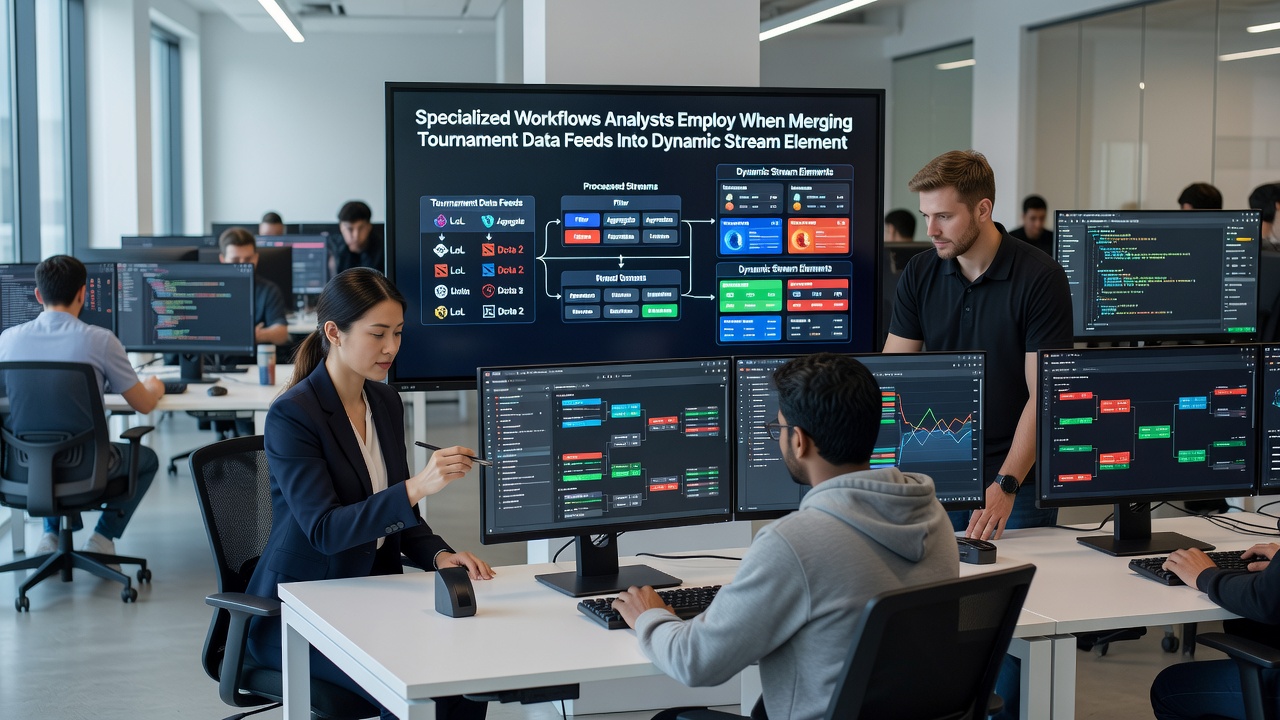
Analysts test synchronization thoroughly in pre-event rehearsals where simulated data streams run alongside actual broadcast hardware. They monitor for drift using diagnostic overlays that display both source timestamps and rendered element times side by side. When discrepancies exceed acceptable thresholds, automated alerts trigger adjustments in polling rates or buffer sizes before live sessions begin.
Dynamic Element Design and Activation
After synchronization setup, analysts define rules that govern how stream elements behave based on data triggers. These rules determine when a highlight panel expands to show kill streaks or when a sidebar refreshes with updated standings. Conditional logic written in languages such as Lua or Python evaluates incoming values and activates corresponding animations or text changes within the streaming interface. Teams document these rule sets in shared repositories so multiple analysts can maintain consistency across different broadcast days.
Case examples show analysts working with titles that generate high-frequency data points, where they segment workflows into separate modules for statistics, predictions, and historical comparisons. One documented workflow at a European circuit event involved layering player performance graphs that pulled directly from merged feeds, and the system handled over 200 updates per minute without visual lag. Observers note that modular design allows quick swaps when tournament organizers change data schemas mid-season.
Quality Assurance and Monitoring
Continuous monitoring rounds out the workflow as analysts watch both data logs and on-screen output for anomalies during broadcasts. They maintain dashboards that track feed health metrics such as packet loss rates and update frequency, and they keep fallback procedures ready for rapid deployment if primary elements fail. Industry reports from groups like the Global Esports Association highlight how systematic monitoring correlates with fewer interruptions in viewer-facing content.
Analysts also review post-event data archives to refine parsing rules and synchronization tolerances for future tournaments. This iterative review process incorporates feedback from production crews who identify visual issues that automated checks might miss.
Conclusion
Workflows for merging tournament data feeds into dynamic stream elements combine acquisition, validation, transformation, synchronization, and monitoring into repeatable sequences that support reliable live production. These methods continue evolving alongside improvements in API standards and streaming tools, and analysts adapt their approaches to accommodate new game releases and circuit requirements. Data from multiple regions shows consistent application of these techniques across professional events, underscoring their role in delivering accurate, timely information to audiences worldwide.