Engineering Live Overlays in Esports: Protocols for Synchronizing Metrics Across Tournament Titles
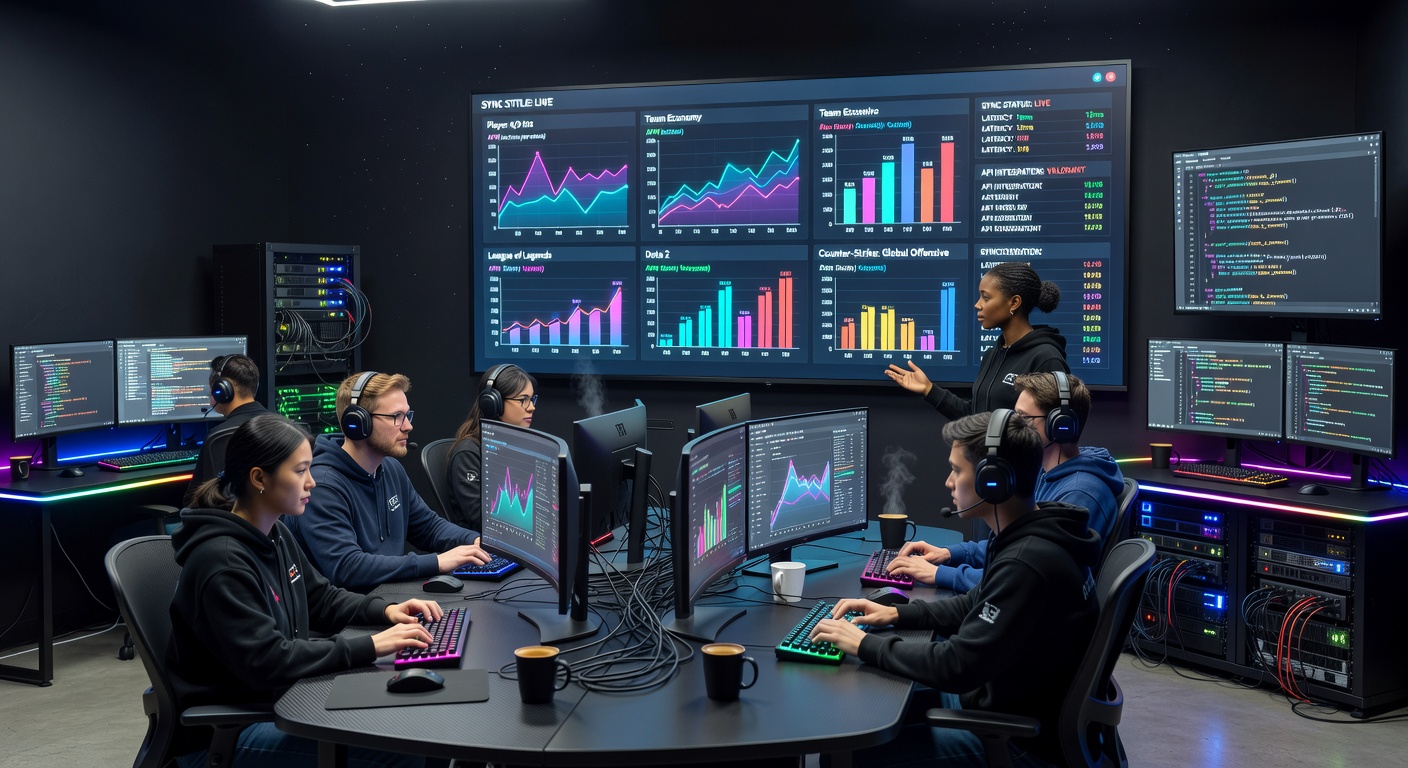
Analysts rely on structured protocols to align live data streams when tournaments feature several competitive titles at once, and these methods ensure metrics such as kill counts, objective captures, and player positioning appear without lag on broadcast graphics. Data arrives from game servers through dedicated APIs, yet each title processes events at different rates so engineers implement timestamp normalization layers that convert incoming packets into a unified clock before any overlay rendering occurs.
Core Components of Sync Protocols
Multi-title events demand modular data ingestion systems because titles like first-person shooters and real-time strategy games emit telemetry in incompatible formats. Engineers build adapter modules that parse each game's native output into a common schema, and this step happens before packets reach the central aggregation server. According to reports from the Esports Research Network, standardized schemas reduce desync incidents by up to 40 percent during cross-title finals.
Once normalized, information travels over persistent WebSocket connections that maintain open channels between game clients and overlay engines. Heartbeat signals travel every 50 milliseconds to confirm link health, and when a signal drops the system switches to a backup UDP stream without interrupting the visual layer. Observers note that such redundancy proves essential in venues where network congestion spikes during peak match hours.
Handling Title-Specific Data Variations
Each game supplies distinct metric sets, so analysts configure conditional mapping rules that activate only for the active title. For example, a basketball-style esports title might feed possession time while a fighting game provides combo length, and the protocol routes these values to the correct graphical template automatically. Researchers at the University of Melbourne documented how conditional routing prevents template mismatches that previously caused on-screen errors in 2024 events.
June 2026 schedules include several festivals that rotate five different titles within a single weekend, and production teams test sync protocols weeks in advance using recorded match replays. These dry runs expose edge cases such as sudden overtime extensions that alter expected data cadence, allowing engineers to refine buffer sizes before live deployment.
Latency Mitigation Techniques
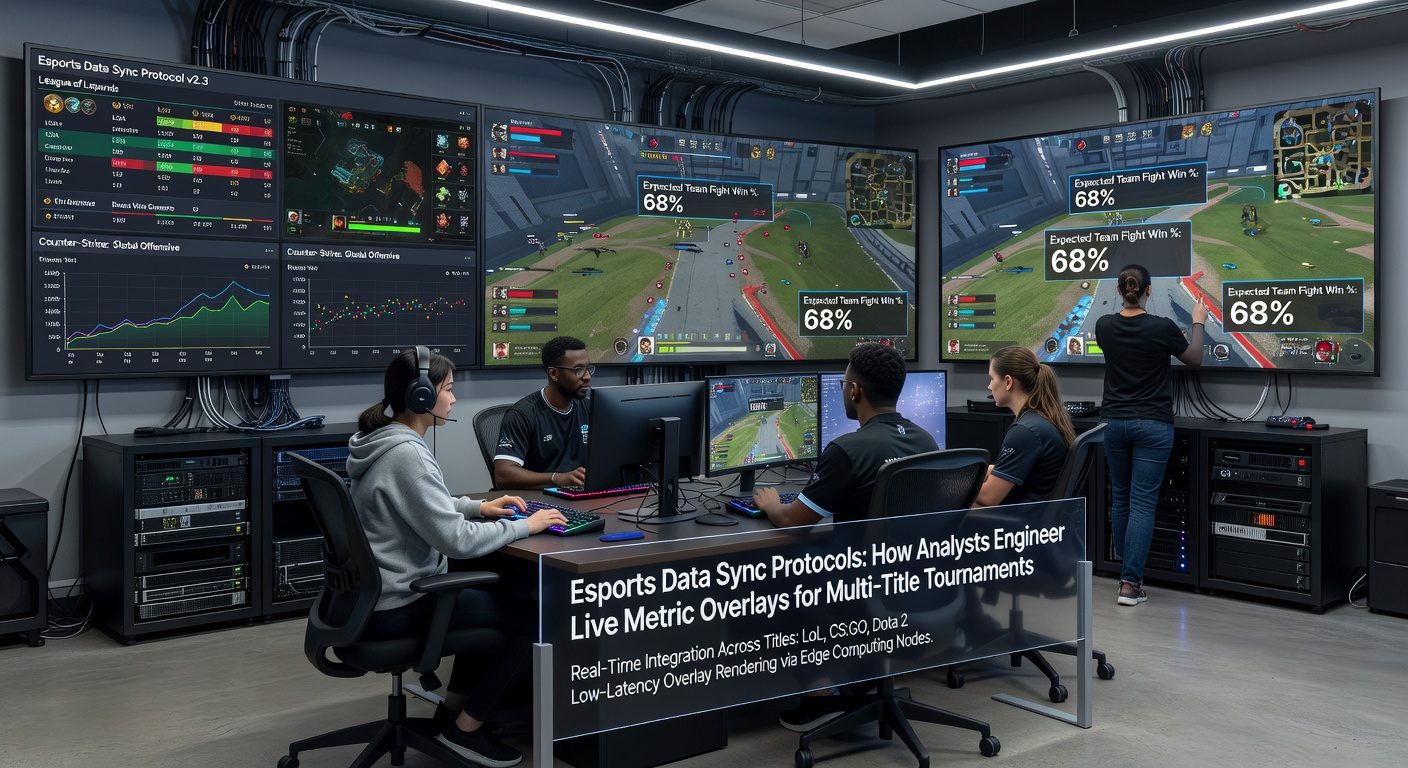
Live overlays must stay within a 200-millisecond window to match commentator pacing, so teams deploy edge computing nodes near tournament arenas. These nodes perform preliminary calculations locally before forwarding summarized packets to the main control room. Data shows that local preprocessing cuts round-trip time by roughly 120 milliseconds compared with full cloud routing.
Buffer algorithms further smooth spikes when one title generates bursty event data while another maintains steady output. Analysts apply weighted averaging that favors fresher packets from high-frequency sources, and this approach maintains visual consistency even when total input volume doubles during championship brackets.
Testing and Validation Workflows
Validation suites run automated checks that compare overlay values against ground-truth logs captured directly from game servers. Discrepancies trigger alerts that pause graphic updates until engineers confirm the root cause. Teams document every correction in shared repositories so future events inherit refined rule sets rather than repeating earlier mistakes.
Industry groups such as the North American Esports Federation publish annual guidelines that recommend minimum sync accuracy thresholds, and many organizers now require third-party audits before granting broadcast licenses. These audits examine packet loss rates, timestamp drift, and failover response times under simulated network stress.
Conclusion
Protocols for syncing live metrics across multiple esports titles continue to evolve as tournaments grow in scope and technical complexity. Engineers combine adapter layers, redundant transport methods, and local preprocessing to deliver accurate overlays that viewers expect during extended broadcasts. Continued collaboration between research institutions and production teams supports incremental improvements that keep pace with expanding event calendars.