Custom Scripts Automate Overlay Changes and Alert Activations in High-Stakes Esports Battles
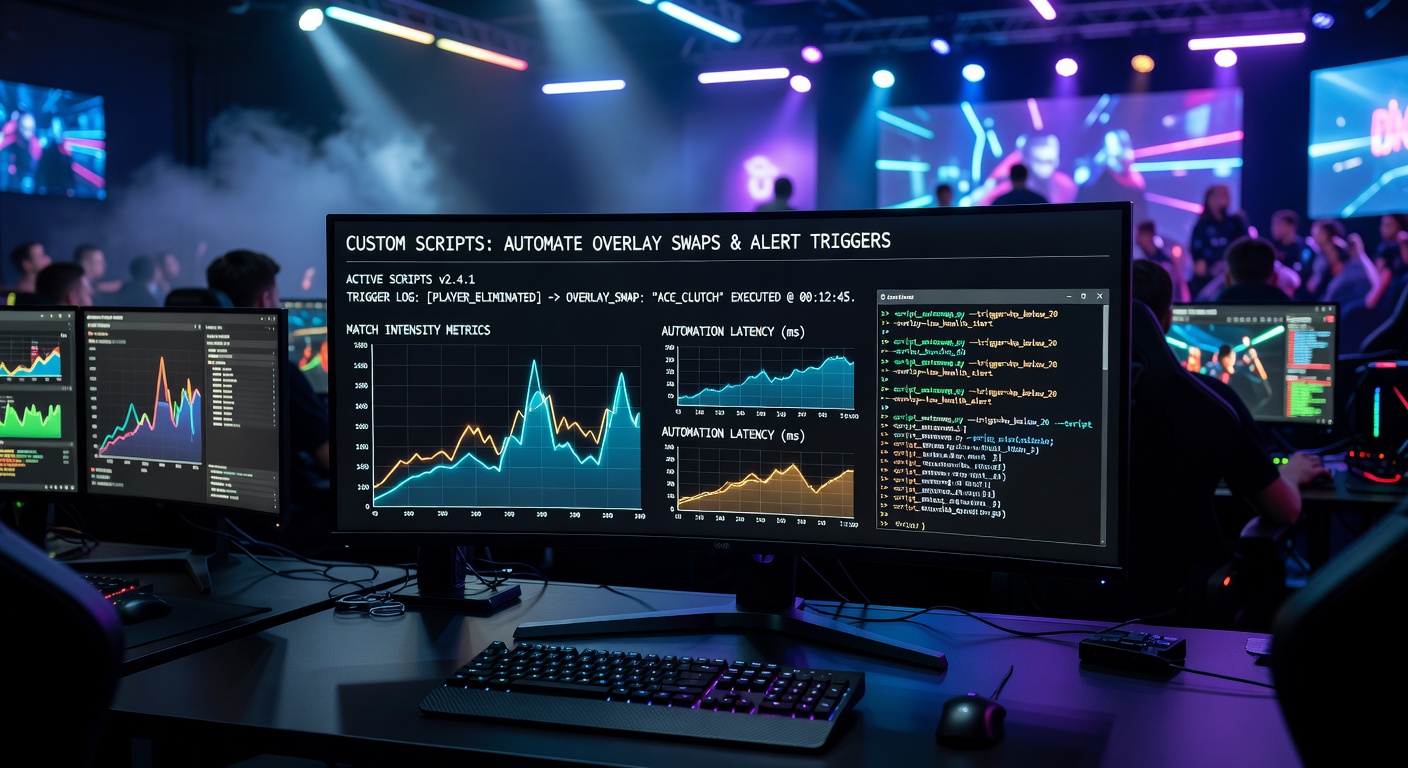
Developers build custom scripts that connect directly to streaming software APIs, allowing overlays to swap automatically when in-game events trigger specific conditions such as multi-kills, objective captures, or round endings, while alert systems activate in sync with those same moments to notify viewers without manual intervention from broadcast teams.
These scripts typically rely on game telemetry data pulled through official APIs or memory readers, and programmers write the logic in languages including Lua for OBS Studio integrations or JavaScript for browser-based overlays; once coded, the scripts monitor real-time match states and execute visual changes within milliseconds of detecting predefined triggers.
Core Mechanisms Behind Automated Overlay Swaps
Teams integrate scripts that read live game data feeds and map those values to visual assets stored in the streaming software, so when a player achieves a pentakill in a MOBA title the overlay shifts from a standard team roster display to a highlighted highlight reel frame, and this transition occurs without producers clicking buttons during fast-paced sequences.
Data indicates that such automation reduces operator workload during events where match intensity peaks, and developers often use conditional statements combined with timers to ensure overlays revert or progress to the next state after a set duration, maintaining broadcast flow across multiple maps or rounds.
Alert Trigger Systems and Event Synchronization
Alert scripts activate pop-up notifications or sound cues tied to the same telemetry inputs, for instance sending a donation overlay or follower alert only after confirming a clutch play has concluded, and programmers fine-tune these triggers using Boolean logic to avoid false positives from partial game events like assists rather than full eliminations.
During preparations for the May 2026 Global Championship circuit, production crews tested updated script versions that incorporate machine learning models to predict high-impact moments based on historical match patterns, allowing alerts to queue slightly ahead of the on-screen action for smoother viewer experiences.
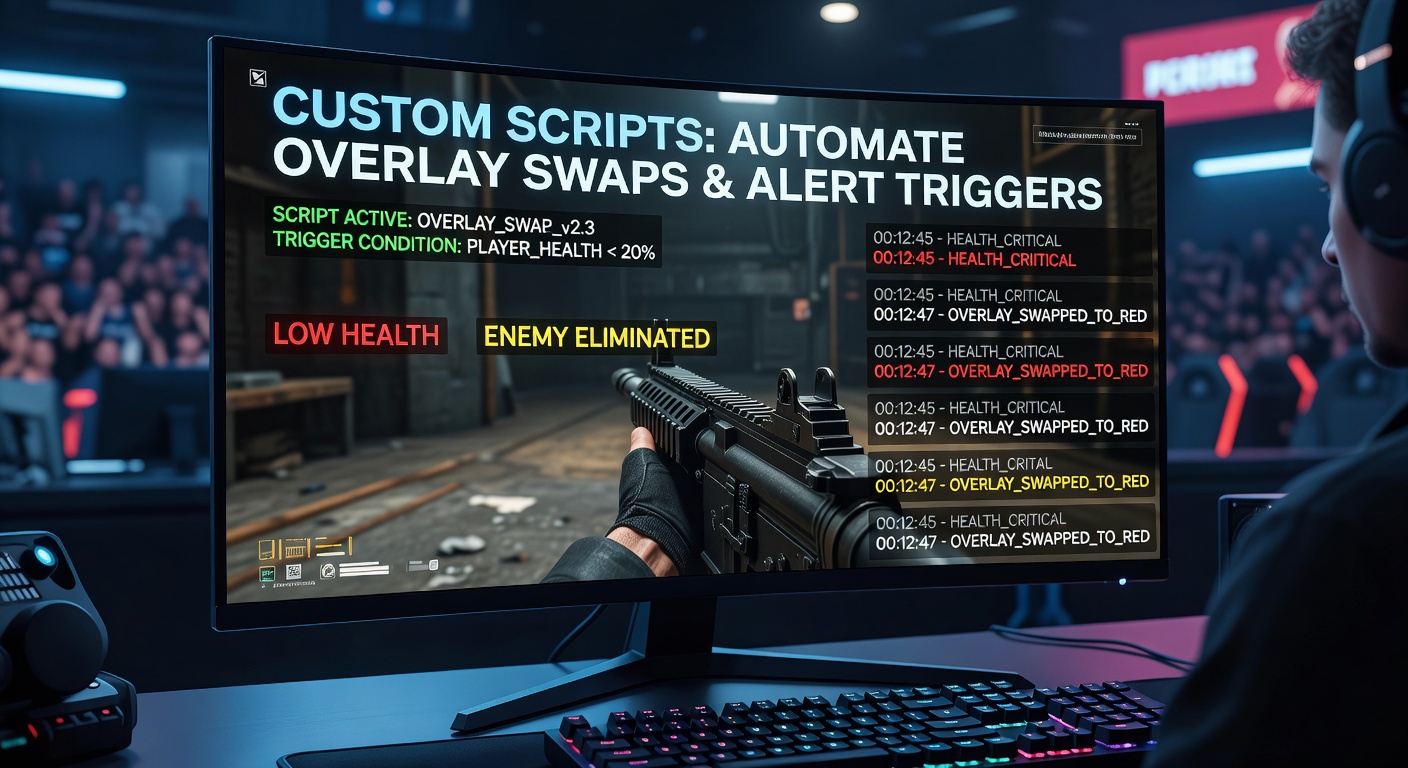
Researchers from institutions across North America and Europe have documented how these combined systems maintain synchronization even under variable network conditions, with scripts employing fallback protocols that pause or delay alerts if telemetry packets arrive out of sequence.
Implementation Examples Across Major Titles
In first-person shooter competitions, custom scripts detect bomb plant events or bomb defusal completions and instantly swap the main overlay to display player health bars alongside a kill feed animation, while parallel alert scripts trigger sponsor messages timed to those exact seconds.
Battle royale productions use scripts that monitor zone closures and player counts, automatically transitioning from wide map views to focused squad overlays when fewer than ten competitors remain; data from industry reports shows these changes occur reliably across thousands of matches each season.
Technical Considerations and Compatibility Factors
Engineers ensure scripts remain compatible with multiple streaming platforms by abstracting API calls into modular functions, allowing the same core logic to work with OBS, Streamlabs, or XSplit environments through simple configuration files rather than full rewrites for each software update.
Security practices include sandboxing script execution environments and limiting permissions to read-only access on game memory, which prevents unauthorized changes while still enabling the rapid response times required during intense tournament moments.
Conclusion
Production teams continue refining these automation approaches as esports events grow in scale and complexity, with ongoing development focusing on broader game support and improved prediction accuracy for alert timing; the result keeps visual elements responsive to match dynamics while freeing human operators to focus on narrative and commentary elements throughout the broadcast.