Charting Skill Transfers: How Esports Competitors Apply In-Game Tactics to Production Roles in Live Broadcasts
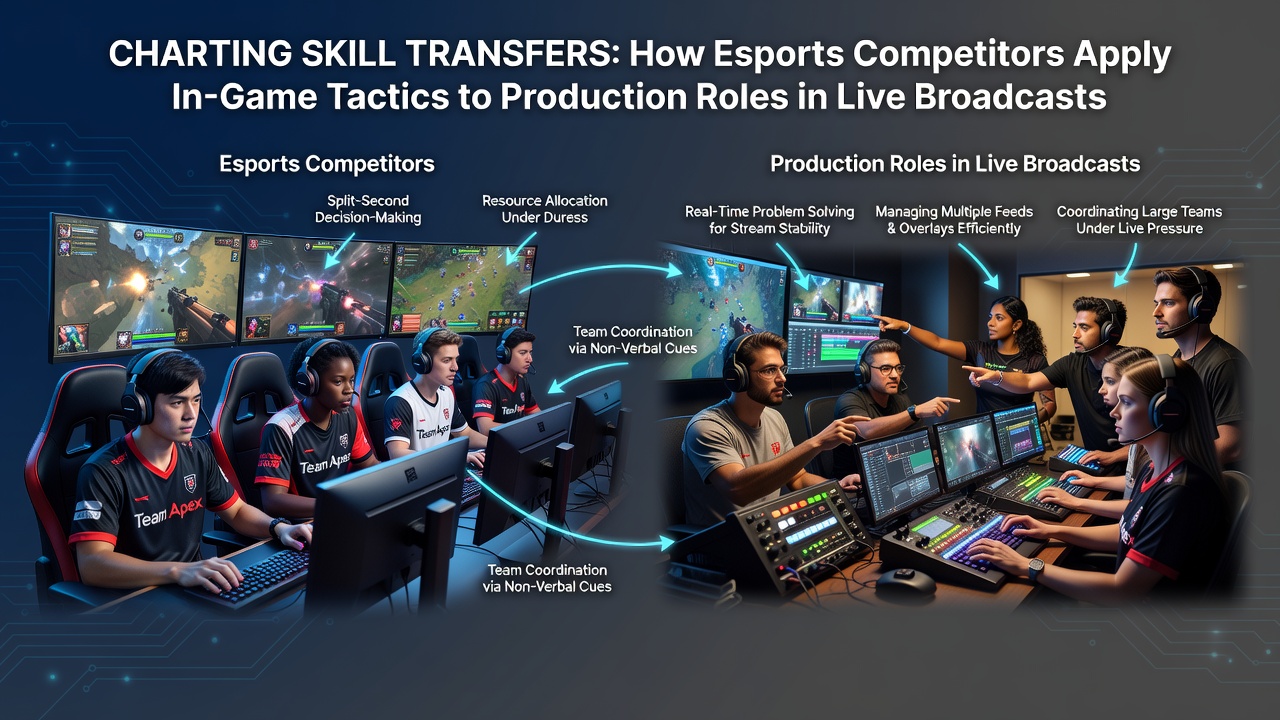
Esports competitors often move into broadcast production roles where they draw directly on in-game experience to manage live streams, and this transfer shows up in how they handle timing, positioning, and coordination under pressure; data from industry reports indicate that players who spent years executing split-second strategies in titles like League of Legends or Counter-Strike now apply similar precision when calling camera switches or adjusting overlays during tournaments. Those who've studied cognitive skills in competitive gaming note that reaction times honed through thousands of matches translate into faster responses when technical issues arise mid-broadcast, while spatial awareness developed from reading maps helps producers frame shots that capture key action without missing context. Observers note that team-based communication tactics, refined through voice chat coordination during ranked play, carry over to directing crew members on headsets, creating smoother workflows that keep streams running without interruptions.
Core Tactical Elements That Migrate to Production
Decision trees built in high-stakes matches become tools for prioritizing broadcast elements when multiple storylines unfold at once, and research indicates that players who mastered resource management in-game often excel at allocating limited production assets like graphics layers or replay queues. According to findings shared by the Global Esports Federation, individuals with competitive backgrounds demonstrate stronger pattern recognition that aids in anticipating viewer engagement spikes, allowing them to trigger relevant alerts or data visualizations at optimal moments. And yet these transfers extend beyond individual performance; group tactics such as flanking maneuvers translate into layered coverage strategies where secondary cameras capture side angles while the main feed follows primary action.
Map awareness cultivated over years of play supports producers in navigating complex arena layouts during live events, ensuring that camera operators receive clear directions on where to position for upcoming objectives. Figures from university studies on skill transfer reveal that former competitors handle multitasking sequences more fluidly, switching between monitoring chat, adjusting audio mixes, and updating scoreboards without losing overall stream coherence. People who've examined these career paths point out that the pressure of performing in front of live audiences mirrors the intensity of tournament finals, building resilience that keeps production teams steady when unexpected delays occur.
Real-World Applications in Tournament Settings
During major events scheduled for June 2026, several production crews include analysts who previously competed at professional levels, and their input shapes how broadcasts highlight strategic depth for viewers. Take one case where an ex-mid laner now oversees the replay system; that individual uses knowledge of common engagement patterns to queue highlights that explain why a particular play succeeded, enriching the viewing experience with insights drawn straight from gameplay mechanics. Crews also report that former shot-callers bring structured briefing styles to pre-show meetings, breaking down segment transitions in ways that mirror in-game huddles.
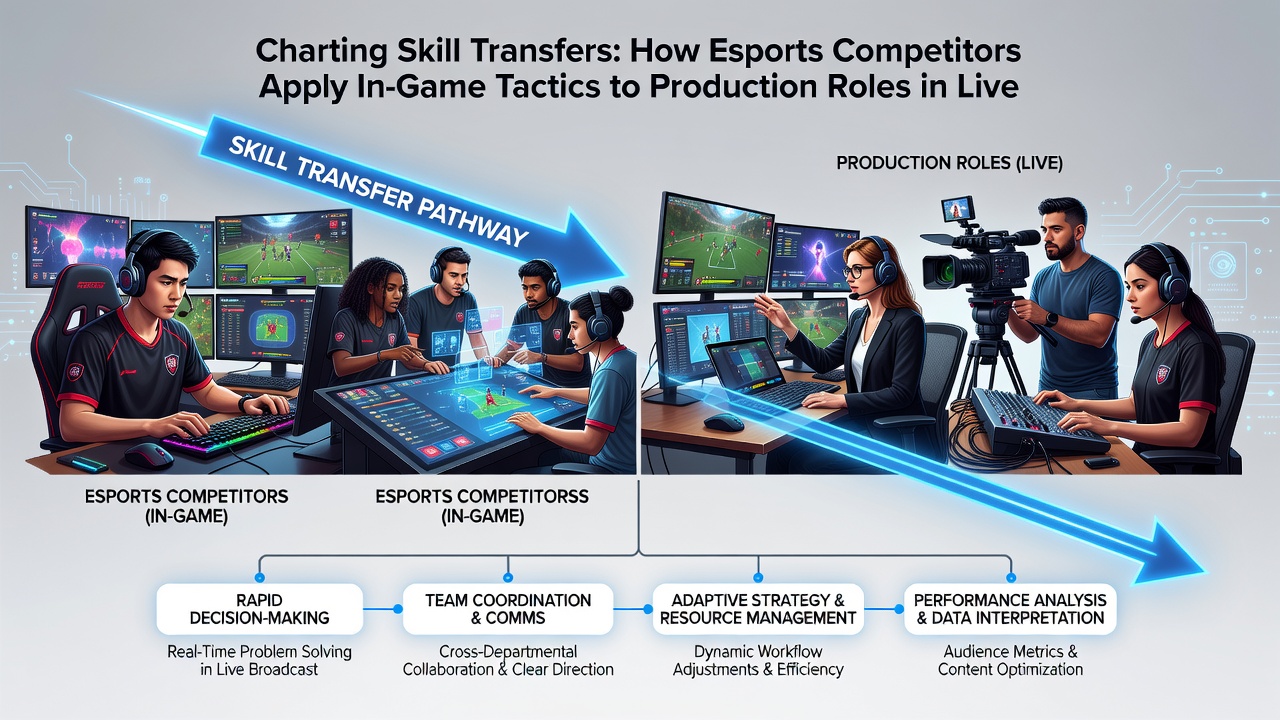
Technical roles such as stream encoding and overlay management benefit when individuals apply timing instincts developed through cooldown tracking or ultimate ability management. Data shows these professionals reduce latency in graphic triggers by anticipating narrative beats, much like they once predicted opponent rotations. Industry organizations including the Esports Integrity Commission have documented how such crossovers strengthen broadcast reliability across regions, with examples from North American leagues illustrating consistent improvements in viewer retention metrics tied to production teams featuring ex-players.
Training Pathways and Skill Documentation
Organizations now run targeted workshops that map specific in-game competencies to production tasks, helping competitors document transferable abilities like resource prioritization and adaptive planning. Those who've reviewed program outcomes find that participants quickly adapt to software interfaces because the underlying logic of managing variables under time constraints remains familiar. Academic papers from institutions in the Asia-Pacific region further detail how eye-tracking studies conducted on players reveal attention patterns that align closely with the demands of monitoring multiple broadcast monitors simultaneously.
Certification programs offered through partnerships with hardware manufacturers incorporate modules on live directing that build on existing tactical knowledge rather than starting from scratch, and this approach shortens onboarding periods for new production staff. Evidence from longitudinal tracking of career transitions shows sustained performance gains when teams deliberately pair former competitors with technical specialists, creating hybrid expertise that covers both strategic narrative and operational execution.
Conclusion
Skill transfers from esports competition into broadcast production continue to shape how live events reach audiences, with measurable impacts on timing accuracy, crew coordination, and content relevance. As more data accumulates from ongoing tournaments and training initiatives, patterns emerge that link in-game proficiency directly to production effectiveness across different titles and regions. These connections support structured pathways that allow competitors to extend their careers while enhancing overall broadcast quality for viewers worldwide.